
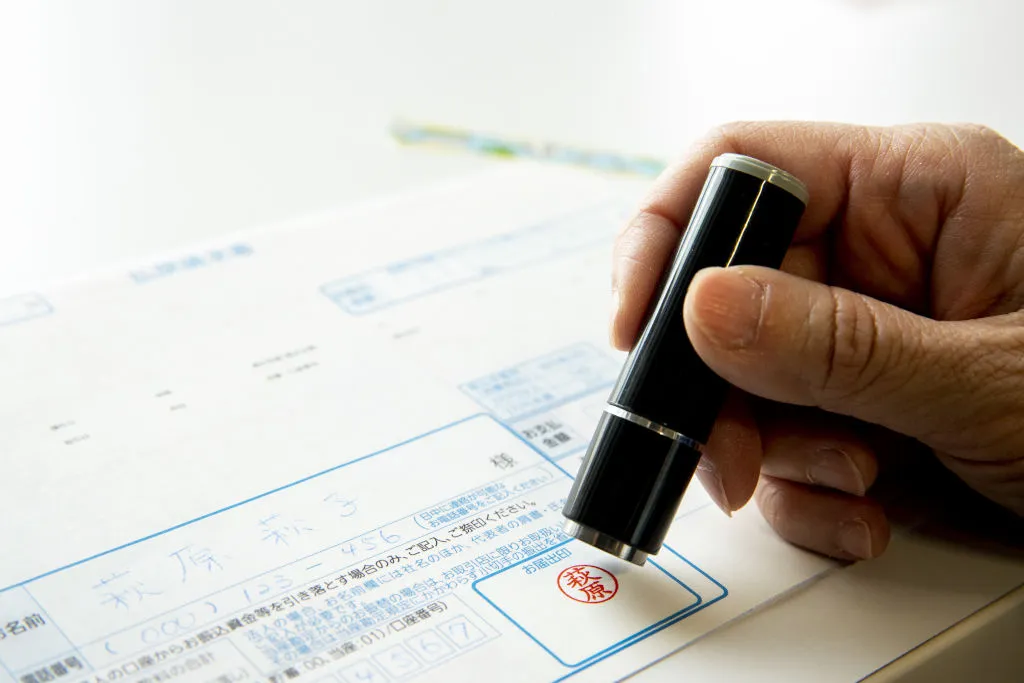
If you are a foreign teacher in Japan, you have probably already figured out that the country runs on paper. Forms for everything. Signatures, yes, but also stamps — and not just once. A hanko for teachers in Japan is less of a novelty and more of a quiet necessity that shows up earlier than most newcomers expect.
Whether you are on a JET placement, working at an eikaiwa chain, or settling into a position at a public junior high school, a personal stamp will eventually come up. Maybe your supervisor hands you a stack of forms on your first week. Maybe the school secretary gives you a patient look and points at a little red circle at the bottom of a page. Either way, it pays to be prepared.
This guide covers what documents typically require a hanko in a school setting, which type and size makes practical sense for teachers, and how to order one that actually works for your situation — whether your name is easy to transliterate or not.
Context and why it matters
Japan’s relationship with personal seals goes back centuries, and while the country has been gradually digitizing certain bureaucratic processes, the hanko has not disappeared from daily professional life — especially in schools. Public and private educational institutions across Japan still rely heavily on physical stamps for internal approvals, attendance tracking, and administrative sign-offs.
For foreign teachers, the nuance here matters. You are often an employee whose name does not fit cleanly into the standard kanji seal format. This creates a small but real friction point: the system expects a stamp, but the most common stamp types are designed for Japanese names written in kanji. That does not mean you are excluded. It means you need to know what type of hanko to get.
There is also a social side to this. Arriving with your own hanko signals that you understand how Japan works. It is a small thing, practically speaking, but Japanese colleagues and administrators often notice. It removes a layer of awkward explanation and speeds up routine processes.
Searching for teaching jobs? ComfysCareer lists English teaching roles in Japan.
What documents may require a stamp
Not every school handles paperwork the same way, and requirements vary by institution, prefecture, and whether you are employed by a public board of education or a private company. That said, the following categories come up consistently for teachers.
Common school-related documents:
- Employment contracts and amendments
- Monthly attendance sheets and time records
- Request forms for paid leave or sick leave
- Expense reimbursement claims (transport, materials)
- Internal approval forms routed through department heads
- Receipt confirmations for salary slips or official notices
- Club activity coordination forms at some schools
Administrative and onboarding documents:
- City hall registration forms (juminhyo, national health insurance, pension enrollment)
- Bank account opening paperwork
- Housing lease agreements, often required alongside other identification
- School housing or dormitory contracts at some placements
A typical scenario: you are a new ALT in a rural town. Your first two weeks involve opening a bank account, registering at the local ward office, signing an employment addendum, and submitting your first attendance sheet. All four of these moments may require a personal stamp, depending on the institution. Going in without one means either borrowing from a colleague or making a second trip — neither ideal.
Another common moment comes around March and April, when Japanese schools close and reopen for the new academic year. Teachers are often asked to sign off on a cluster of year-end and year-start documents in a short window. Having your hanko ready avoids the bottleneck.
Common mistakes:
Using a borrowed stamp or a generic stamp from a 100-yen shop is technically possible for informal documents, but it is not advisable for anything that goes into your employment file. Generic stamps with surnames like “Tanaka” are not your name. For formal paperwork, you want a stamp that is clearly yours. Some institutions may also reject obviously generic stamps on certain forms, though this varies widely.
Which hanko type and size to choose
There are three main types of hanko commonly used in Japan: jitsuin (registered seals), ginko-in (bank seals), and mitomein. For teachers — especially foreign teachers doing everyday school and admin work — the mitomein is almost always the right choice.
Why mitomein works for most teachers:
A mitomein is an unregistered personal seal used for routine, everyday stamping. It does not need to be registered with the city office, which simplifies things enormously. It is the standard choice for attendance records, internal school forms, leave requests, and most of the daily paperwork that crosses a teacher’s desk. For the vast majority of what a foreign teacher needs a stamp for, a mitomein is entirely sufficient.
Size:
Standard mitomein come in 10.5mm or 12mm diameter. The 10.5mm is the most common size for everyday use and fits comfortably in the small circles pre-printed on most Japanese forms. For teachers, 10.5mm is usually the safer choice unless you have been specifically advised otherwise.
Name format for foreign teachers:
This is where foreign teachers need to think carefully. You have a few options:
- Katakana: Your name written in the phonetic script used for foreign words. For example, “Sarah” becomes サラ and “Michael” becomes マイケル. This is readable by Japanese colleagues and commonly accepted.
- Romaji: Your name in the Latin alphabet. Less traditional, but increasingly common and accepted at many institutions.
- A shortened version: If your full name is very long, a shortened or family-name-only version is practical and still clearly personal.
The key is consistency. Whatever name you use on your hanko should match what appears on your employment documents and ID. When in doubt, check with your school’s administrative office before ordering.
Checklist before ordering:
- Confirm which name appears on your employment contract
- Check if your school or board of education has specific hanko requirements
- Decide on name script: katakana, romaji, or combination
- Choose 10.5mm unless you have a specific reason to go larger
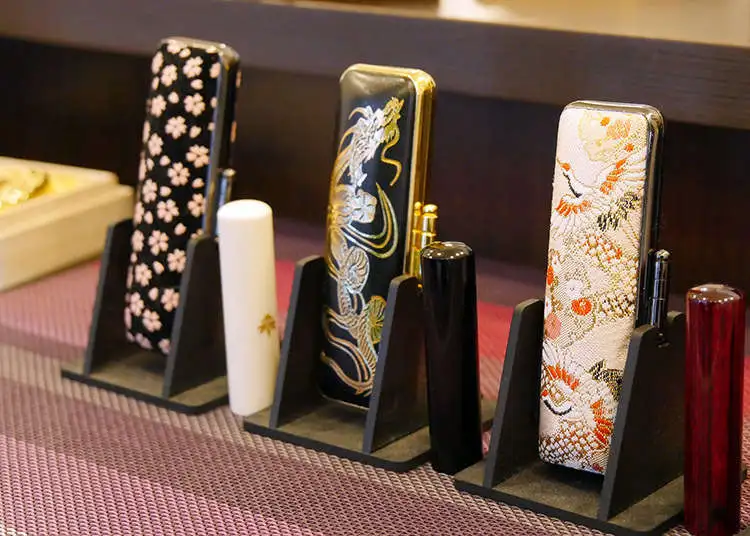
- Opt for a durable material: resin or wood composite handles daily use well
Ordering tips for foreigners

Ordering a hanko in Japan as a foreigner used to mean either finding a shop that could handle non-Japanese names or relying on colleagues for help. Online services have made this much easier, and HankoHub is specifically built with foreigners in mind — including the ability to create stamps in katakana, romaji, or a mix of both.
A few practical tips:
Order early. If you know you are starting a teaching role in Japan, order your hanko before you arrive or within your first week. Paperwork often appears sooner than expected, and having the stamp ready removes a small but recurring source of stress.
Use your legal name or the name on your work documents. There can be a temptation to use a nickname or a Japanese nickname your students have given you, but for official purposes, stick to what is on your contract and ID. A mismatch can cause confusion later.
Keep it simple. For everyday school use, a basic mitomein in a clean, readable font does the job perfectly. You do not need an elaborate design, a rare material, or an oversized stamp. A simple, well-made seal that stamps clearly is what matters for administrative use.
Get a case with an ink pad built in. Many basic hanko sets come with a small ink pad or a self-inking case. For daily school use — where you may be stamping multiple forms quickly — a self-inking design is genuinely convenient. It reduces the chance of smearing and means you are not hunting for a separate ink pad.
Think ahead about multiple uses. The same mitomein you use at school can also work for everyday life admin: the ward office, bank documents, package deliveries. There is no need to buy separate stamps for different contexts unless a specific document requires a registered jitsuin, which is a different category entirely.
One scenario worth noting: teachers placed in rural or semi-rural areas often have less flexibility in terms of local shops that cater to foreign names. Online ordering with clear English-language support, like HankoHub provides, is usually more reliable than hoping the local hanko shop in a small town can handle a non-Japanese name.
FAQ
Do I legally need a hanko to work as a teacher in Japan?
Not in every case, but in practice, most employment contracts and administrative forms in Japanese schools still expect one. Some private language schools have adapted to digital signatures or handwritten signatures for foreign staff, but public school placements and many private institutions still operate with stamps as standard. It is safer to have one than to need one and not have it.
Can I just sign instead of stamping?
For some documents, yes. Japan has been loosening some hanko requirements in recent years, particularly for government procedures. In a school context, though, forms with a dedicated stamp box (印鑑欄) generally still expect a stamp. Whether a signature is accepted depends on the specific form and the institution. When in doubt, ask your school’s administrative staff before signing.
What is a mitomein exactly?
A mitomein is an everyday personal seal used for informal and semi-formal purposes. It does not need to be registered with the city office (unlike a jitsuin), which makes it the practical choice for most of what teachers deal with day to day. Think of it as your personal stamp for routine life.
Can I use katakana on my hanko even if my name is not Japanese?
Yes, and this is one of the most common approaches for foreign teachers. Katakana is the standard way to write foreign names in Japanese, and a katakana hanko is widely accepted. Your colleagues and administrators will have no difficulty recognizing it.
What if my name is long or unusual to transliterate?
This is very common. Using just your family name, or a commonly used shortened version, is perfectly acceptable for a mitomein. If you are unsure how to render your name in katakana, HankoHub can help with transliteration guidance when you order.
Do I need a different hanko for banking versus school?
Not necessarily. Many people use the same mitomein for both school paperwork and basic banking. However, if a bank requires a registered seal (jitsuin), that would be a separate stamp. For most standard bank accounts in Japan, an unregistered mitomein is accepted.
Next steps

If you are heading to Japan to teach, or you are already there and have been getting by without a stamp, now is the right time to sort this out. A well-made personal hanko removes a small but persistent friction from professional life in Japan — and the process of ordering one is simpler than most people expect. Head to HankoHub to order a personal hanko in katakana or romaji, sized and styled for everyday school use. The whole process takes a few minutes, and you will have it before your next attendance sheet lands on your desk.